
ANCIENT GIANTS: THE ETERNAL TRIUMPH OF GYMNOSPERMS
-Acharya Balkrishnaa, Sunita Bishta, Uday Bhan Prajapatia, Anupam Srivastavaa
Gymnosperms, often referred to as ‘naked seed’ plants, are a captivating and remarkable group of species, known for their substantial medicinal and economic importance. Over the course of evolution, these non-flowering plants adapted by developing cones as specialized structures for reproduction. They hold immense research significance, as phylogenetic analyses reveal that they are a sister clade to angiosperms, the dominant plant group of today. Moreover, fossil evidence and evolutionary trends highlight a dynamic interplay between these two groups, showing that the rise of one often corresponds to the decline of the other, and vice versa.
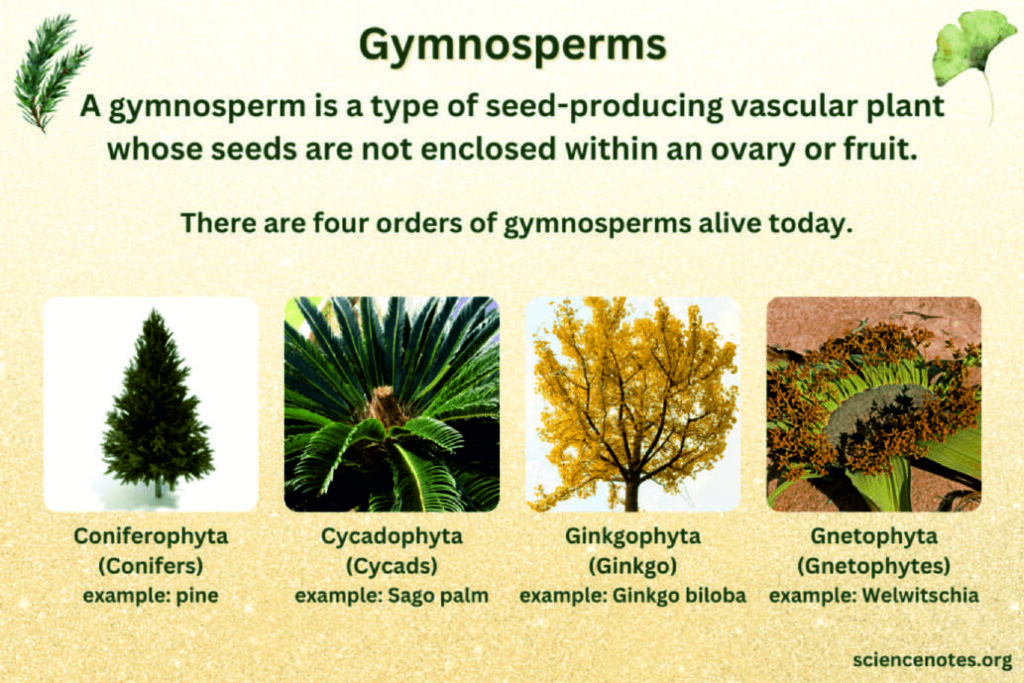
Gymnosperms, once the most dominant and widespread group of plants, surpassing angiosperms in proliferation, are now among the most threatened plant groups in the current anthropocene era. These valuable plants have undergone numerous changes over the course of evolution, influenced by both climatic and environmental factors. Those that successfully adapted over time have managed to survive, while those unable to cope with changing conditions have become extinct (Macrotaeniopteris, Ginkgoites and Buriadia). Today, their presence has significantly diminished, with only four remaining orders-Cycadales, Ginkgoales, Coniferales, and Gnetales-comprising approximately 1,081 species generally inhabiting higher elevations and latitudes. In contrast, angiosperms have flourished, spanning 64 orders and encompassing nearly 350,000 species (Scutt, 2018). Although their numbers are significantly lower compared to angiosperms, the surviving gymnosperms demonstrate remarkable adaptability and resilience. Their ability to endure even the harshest conditions reflects their strength and determination to persist through time. In the geological time scale, conifers were the first to originate, followed by Cycadales and Ginkgoales in the Permian period, while Gnetales emerged later in the Triassic period among all extant gymnosperm orders. The gradual decline of these plant groups created opportunities for the emergence and rapid expansion of angiosperms during the Cretaceous period (Singh et al., 2018). In case of angiosperms advanced reproductive strategies and anatomical and morphological adaptations proved beneficial factors for their establishment.
Gymnosperms have endured cycles of mass extinction, followed by phases of radiation and decline. Scientists have sought to understand the reasons behind their decreasing diversity over time. While some suggest a slow rate of speciation as a contributing factor in gymnosperms decline, the most widely accepted explanation is extinction driven by changing environmental conditions on Earth. Another unanswered question and current topic of ongoing debate is whether modern gymnosperms are relic species that survived the Cretaceous-Paleogene (K-Pg) mass extinction or if they are the result of more recent extinction events and speciation processes.
Of the total extant gymnosperms known till date conifers are the largest and most evolved group so far. Currently, conifers are the most diverse group with around680 species pan-globally distributed followed by Cycadales with around 300 species and Gnetales with around 100 species (Singh, et al., 2018). Ginkgoales, in contrast, is represented by a single surviving species, Ginkgo biloba. The present-day distribution of gymnosperms is closely linked to the geological history of Pangea, the super continent that began breaking apart during the Jurassic period-a time when gymnosperms were abundant. As Pangea split into Laurasia and Gondwana, and these landmasses further fragmented into separate continents with diverse environmental conditions, gymnosperms adapted to different regions, shaping their current global distribution. This continental breakup may have also played a role in the radiation of angiosperms and the subsequent decline of gymnosperms due to changing environmental conditions.
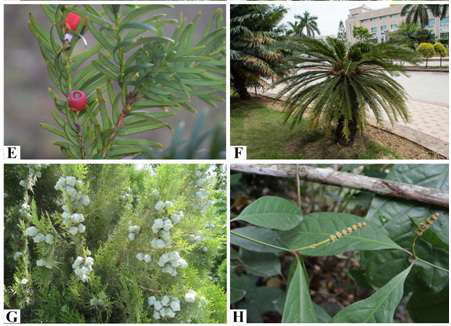
Table 1: Some common Gymnosperms, their etymology and uses.