
Cloudbursts: An emerging threat in the Himalayan Region of India
By Aditya Joshi, PhD, IFS (Retired), Ex PCCF & HoFF, Advisor, Think Tank, Mobius Foundation, Connaught Place, New Delhi, India; Neha Bhatnagar, Research Associate, Think Tank, Mobius Foundation, Connaught Place, New Delhi, India
Introduction
The Indian Himalayan region has a unique topography that increases its vulnerability to cloudbursts. Observations for the Himalayan region have generally been sparse with a lack of extensive data, which has historically limited the understanding of extreme weather events. During the past two decades improvements in observational technology have significantly improved the capacity to monitor precipitation levels at the regional level.
Cloudburst
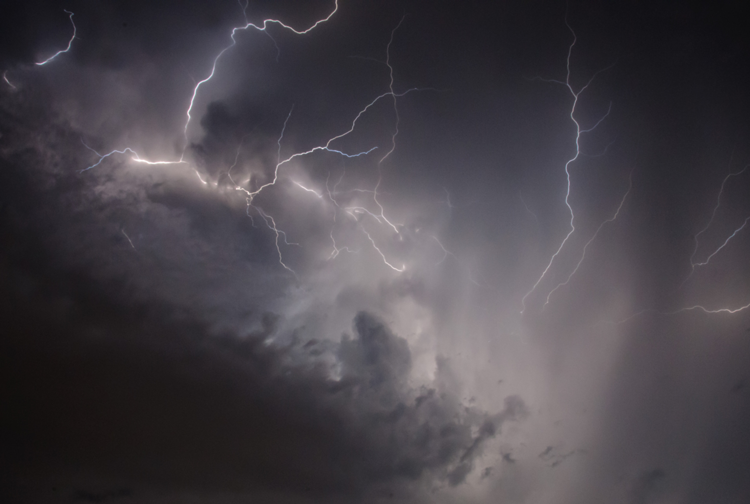
A cloudburst is a localized but intense rainfall activity. The India Meteorological Department (IMD) defines “cloudburst” events as events with heavy rainfall greater than or equal to 100 mm/h, and associated with strong winds and lightning. Cloudburst can therefore be characterized as an extreme weather event with large amounts of rainfall over a small area within a short period with a rainfall of 100 mm or more in one hour. Even a rainfall of 50 mm within just 30 minutes over the same area can also be classified as a cloudburst (as mentioned in the document of IMD-Srinagar available at https://mausam.imd.gov.in/srinagar/img/wd.pdf). Such extreme precipitation levels over a brief period can cause severe damage, particularly in the Himalayan region. Studies reveal that cloudbursts typically happen over small geographical areas, ranging from 20 to 30 sq. km. They are responsible for flash floods, inundation of low-lying areas, and landslides in hill areas causing extensive damage to life and property.
Cloudbursts usually occur when warm air currents block the raindrops from falling and cause an accumulation of water. The moisture-saturated clouds cannot release water due to the upward movement of warm air currents. This updraft facilitates the formation of Cumulonimbus clouds, which can grow to altitudes of up to 12-15 km, occasionally reaching 21 km. As raindrops are pushed upward by these currents, they increase in size until they become too heavy for the clouds to retain, and subsequently fall rapidly, resulting in intense rainfall.
Increasing Frequency and Causes
In recent years, the frequency and intensity of these events have increased due to the warm environmental conditions. Studies show that the significance of natural climate variability in these events is much more than previously recognized. Changes in land use and land cover, large-scale atmospheric circulations, and effects of climate change are other factors contributing to their intensity.
According to studies, global warming is expected to increase by 1.5°C by the end of the century. A research article published in the journal One Earth in 2020 states that the Hindukush Himalayan region will get warmer by 1.8°C, mostly due to rising greenhouse gas concentrations from human activity, and other factors like aerosols and changes in land use. Notably, extreme temperature patterns have changed in line with the general warming. As per the findings of Raghavan Krishnan, Arun Shrestha, and others published as a book chapter in 2019, there has been a decline in the frequency of cold days and nights, with a reduction of 0.85 days per decade for cold days and 2.40 days per decade for cold nights. They also state that warm days and nights are becoming more common, increasing by 1.26 days and 2.54 days each decade, respectively. In terms of precipitation, both the frequency and intensity of heavy rainfall events over the past 50 years have increased. The severity and occurrence of water-related hazards will rise in the Indian Himalayan region if these trends continue.
Current Trends and Past Events
Cloudbursts have become more common in the Uttarakhand Himalayas in recent years. They occur more frequently throughout the monsoon season and sometimes the pre-monsoon season, which runs from March to May. Increased frequency of landslides, debris flow, and flash floods have been reported from this increase, seriously damaging infrastructure, property, and human life. The area is especially susceptible to natural calamities because of its unstable geology, steep topography, and variable rainfall patterns.
In June 2013, a midday cloudburst in the upper reaches of the Himalayas in Uttarakhand led to flash floods including Glacier Lake Outburst Flood (GLOF), and landslides claiming over 6,000 lives and sweeping away several settlements, including the one around the Kedarnath shrine. In 2021, a series of cloudbursts occurred in Uttarakhand. One cloudburst was recorded in the Chinyalisaur block of Uttarkashi, and another in Augustmuni in Rudraprayag. Later that year, another cloudburst occurred in Ramgarh in Nainital District, a popular hill town, causing flash floods that resulted in 50 casualties, as mentioned in a research paper published in the journal Discover Water in 2022.
Mitigation and Adaptation Strategies
Government agencies and local communities urgently need to adapt to the effects of the emerging issues of extreme rainfall events and cloudbursts. To address these issues, government bodies and communities need to collaborate effectively. Firstly, better land use practices have to be implemented as a rule. Habitation should be situated at a safer distance from first-order streams, and all construction should be done only on firm ground. Such aspects have been very well highlighted in the publication entitled Cloudbursts over Indian subcontinent of Uttarakhand Himalaya: A Traditional Habituation Input from Bansoli, District-Chamoli, India’ (International Journal of Earth Sciences Knowledge and Applications, 2020). Construction activities must be prohibited in areas prone to landslides, and old landslide areas should be mapped and designated for afforestation and plantation activities.
Improving monitoring and forecasting is a crucial aspect. This involves installing advanced monitoring devices in strategically identified locations, analyzing long-term data to develop robust climate change detection models, and ensuring that local administrations are well-prepared for disaster response and emergency planning. Additionally, comprehensive evacuation plans tailored to cloudburst scenarios should be developed.
Controlling tourism and its environmental impact is necessary. Annual visitor quotas and environment taxes should be implemented and enforced to manage tourist impact and vehicular movement. Restrictions on mass tourism should be applied in eco-sensitive areas such as Char Dham, Valley of Flowers, Hemkund Sahib, Glacier Regions, and other critical habitats.
Finally, generating awareness among communities and tourists is vital. Local communities should be educated on climate change and its impacts on land use. Briefings on “Do’s and Dont’s” should be given to pilgrims and tourists to promote environmental responsibility in fragile ecosystems. Local communities should also receive training in disaster management and response.
These comprehensive measures highlight the growing dangers of cloudbursts, landslides, and consequent floods. Effective implementation will require closer cooperation among local authorities, communities, and governments. Rapid and decisive adaptation measures are essential to enhance resilience and protect the region from the escalating impacts of climate change.