
Project Bamboo Village India
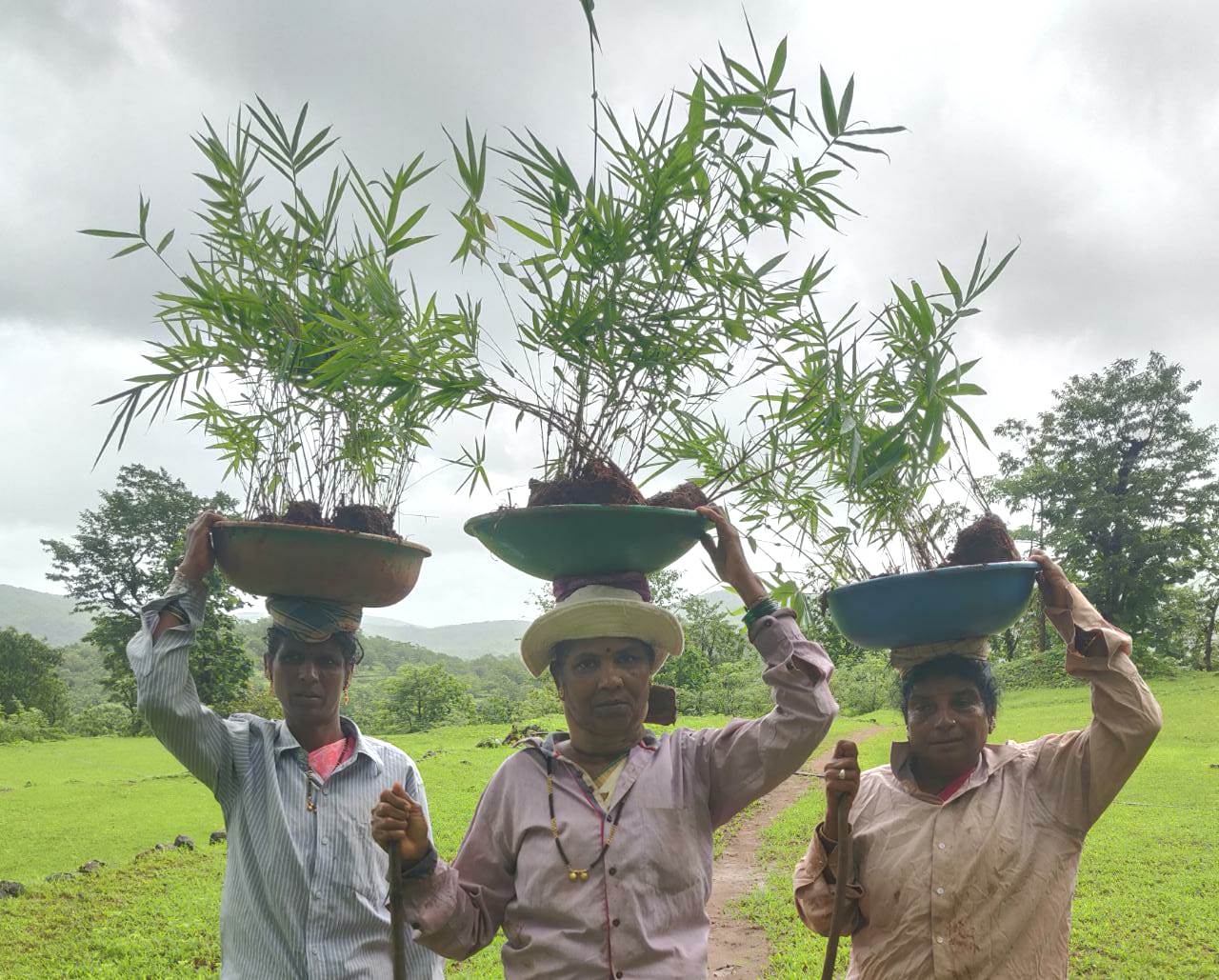
By Bhavesh Karekar, Founder, TreePle Charitable Trust, Pune, Maharashtra, India
TreePle Charitable Trust is a registered NGO working towards afforestation by undertaking macroscale tree plantation in the Konkan region of Maharashtra, India. The core focus of the Trust is to work towards offsetting carbon footprints by planting native Indian trees like Neem (Azardirachta indica), Sacred Fig (Ficus religiosa), Indian Banyan (Ficus benghalensis), Cluster Fig (Ficus racemosa), Siamese Cassia (Senna siamea), Tamarind (Tamarindus indica), Bamboo (Bambusa spp.), etc., which are known for their properties of purifying the atmosphere and creating clean breathing air. The Bamboo Village India Project initiated by TreePle Charitable Trust, is a transformative initiative that showcases the practical implementation of sustainable practices. It plays a vital role in environmental conservation and community development, thereby making a positive impact on both fronts.
Bamboo is a versatile and fast-growing plant that can provide numerous benefits, including soil conservation, carbon sequestration, and the production of renewable resources. Currently, TreePle Charitable Trust is associated with more than 200 farmers in the Konkan region for bamboo plantation over 1000 acres of land, and shows a significant commitment to sustainable agriculture and environmental conservation. TreePle Charitable Trust is not only promoting bamboo plantations, but also actively supporting rural communities by creating employment opportunities and generating income through sustainable farming practices. This multi-faceted initiative has the potential to bring about positive impacts on the local economy, ecology, and overall well-being of the region.
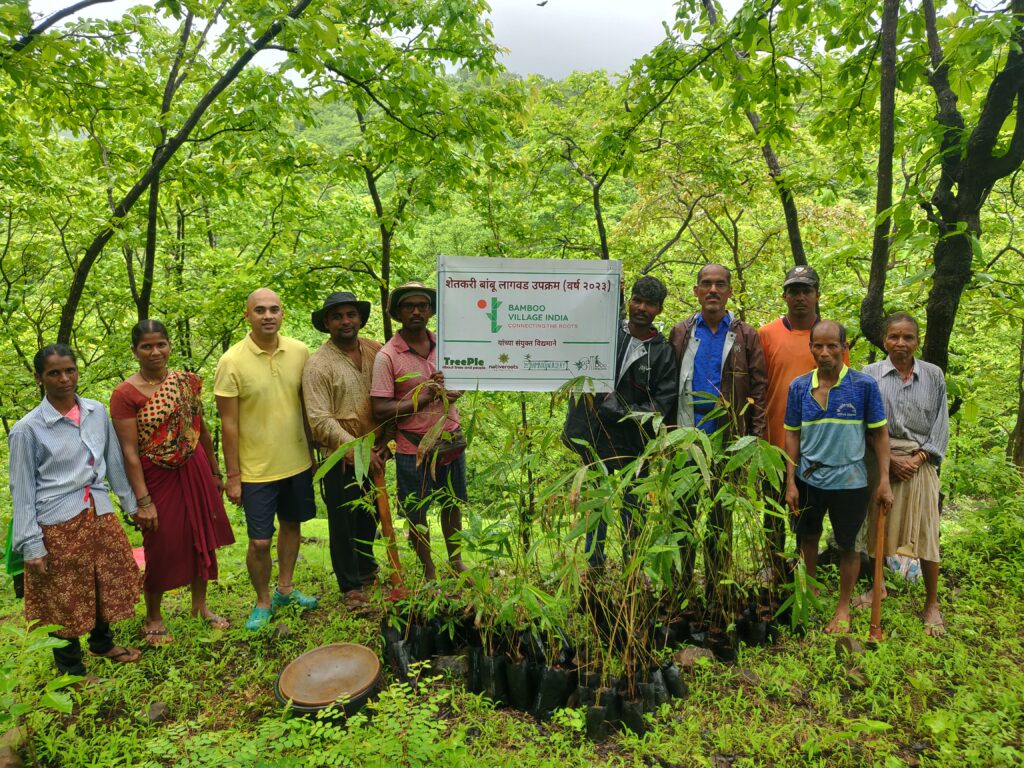
Bamboo plantation being carried out at Vadavali Village, Maharashtra, India
Some potential outcomes of Bamboo Village India Project are as follows:
Economic outcome
Income generation: Bamboo farming can act as a source of income for farmers and local communities. The sale of bamboo culms, shoots, or value-added bamboo products can contribute to increased household income and livelihood improvement.
Employment opportunities: Bamboo farming projects can create employment opportunities along the value chains, including plantation establishment, maintenance, harvesting, processing, and product manufacturing. This can lead to job creation and local economic development.
Market diversification: Bamboo farming can diversify local economies by creating new market opportunities. Bamboo-based products, such as furniture, handicrafts, construction materials, or textiles, can be sold locally or internationally, and thus contribute to economic growth and market diversification.
Environmental outcome
Carbon sequestration: Bamboo has a high carbon sequestration potential because it absorbs a significant amount of carbon dioxide from the atmosphere. Thus, large-scale bamboo plantations can help to mitigate climate change by acting as carbon sinks.
Biodiversity conservation: Bamboo forests provide habitats for diverse plant and animal species. By promoting bamboo farming, degraded lands can be restored, and habitats can be created, which in turn can contribute to biodiversity conservation and ecosystem restoration.
Soil and water conservation: The extensive root system of bamboo prevents soil erosion, improves water infiltration, as well as reduces the risk of landslides and water runoff. Thus, bamboo farming can contribute to soil and water conservation, and in this way help to protect valuable natural resources.
Sustainable land use: Bamboo farming offers an alternative land use option for degraded or marginal lands, thereby promoting their productive and sustainable utilization. It can reduce pressure on natural forests and encourage reforestation efforts.
Social outcome
Poverty alleviation: Bamboo farming can help to alleviate poverty, particularly in rural areas. By providing income-generating opportunities and alternative livelihoods, it can contribute to poverty reduction and improve the quality of life for local communities.
Community empowerment: Engaging local communities in bamboo farming projects empowers them by providing skills training, knowledge sharing, and opportunities for entrepreneurship. This can enhance community resilience, self- reliance, and decision-making processes.
Cultural preservation: Bamboo has cultural significance in many regions. Bamboo farming projects can help to preserve cultural traditions, promote local crafts, and maintain a sense of identity and cultural pride within communities.
Knowledge exchange and capacity building: Bamboo farming initiatives often involve knowledge exchange between different stakeholders, including farmers, researchers, and experts. This promotes capacity building, innovation, and learning, leading to improved agricultural practices and sustainable development.
The specific outcomes and impacts of bamboo farming can vary depending on factors such as the scale of the project, the species of bamboo, the local context, and the management practices implemented.
Current status
TreePle Charitable Trust has achieved significant success in its endeavors thus far, completing a bamboo plantation over an area of 40 acres. The organization is actively involved in managing the plantation to ensure its ongoing growth and sustainability. This accomplishment highlights its commitment to promoting bamboo as a sustainable resource and its dedication to the Project’s long-term success.