
Climate Change Threatens Agriculture in Assam: Urgent Action Needed to Build Resilience
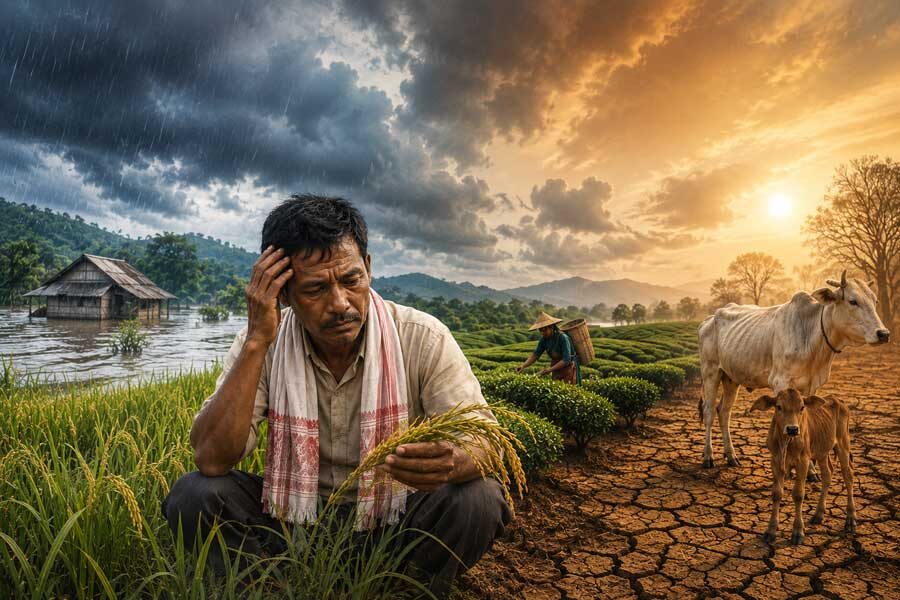
Assam, situated in the northeast of India, is an agrarian state with over 70% of its population engaged in agriculture. However, climate change is posing a significant threat to the productivity and sustainability of the region’s agriculture sector. According to a study by the Indian Institute of Technology (IIT) Guwahati, the state is experiencing a decline in crop yields due to changing weather patterns, including an increase in temperature, changes in rainfall patterns, and more frequent occurrences of floods and droughts.
The changing climate is leading to a shift in cropping patterns in the region, with traditional crops such as rice, tea, and jute becoming more difficult to grow. A report by the Ministry of Environment, Forest and Climate Change highlights that the production of rice, which is the main crop grown in Assam, is expected to decline by 10-15% by 2030 due to climate change. This could lead to a significant impact on the livelihoods of small-scale farmers, who make up the majority of the state’s agricultural workforce.
Moreover, the increase in temperature and changes in rainfall patterns have led to a rise in pest infestations, which are causing crop damage and yield losses. A study by the Indian Council of Agricultural Research (ICAR) found that the infestation of pests such as tea mosquitoes, red spider mites, and thrips has increased due to the changing climate. This is leading to higher use of pesticides, which can have negative impacts on human health and the environment.
The changing climate is also having an impact on livestock production in Assam. According to a study by the ICAR, changes in temperature and rainfall patterns are leading to heat stress, reduced milk production, and a higher incidence of diseases among livestock. The loss of grazing lands due to flooding and erosion is also leading to a shortage of fodder, which can cause malnutrition in animals.
In conclusion, climate change is posing a significant threat to agriculture in Assam, and urgent action is needed to mitigate its impacts. It is essential that farmers and policymakers work together to develop climate-resilient agricultural practices that can adapt to changing weather patterns. This could include the promotion of sustainable and organic farming practices, the development of drought and flood-resistant crop varieties, and the use of climate information and early warning systems to inform decision-making. Only through such efforts can we hope to build a sustainable and resilient agriculture sector in Assam that can withstand the challenges of a changing climate.