











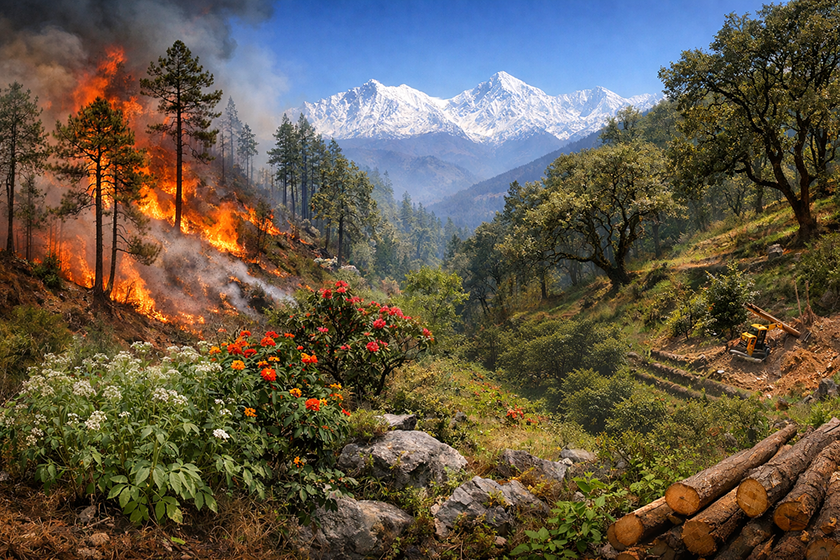
HIMALAYAN FORESTS UNDER PRESSURE: UNDERSTANDING DRIVERS OF DEGRADATION AND PATHWAYS TO RECOVERY
The Himalayan ecosystem, covering approximately 12.84% of India’s total geographical area (Negi, 2009), is one of the world’s most biologically diverse and ecologically significant regions. Recognized as a global biodiversity hotspot, it harbors more than 8,000 species of flowering plants, nearly one-fourth of which are endemic (Singh & Hajra, 1996). Among these, around 10% are trees, 8% wild edibles, and over 15% medicinal plants (Rawat & Chandra, 2014), reflecting the immense ecological, cultural, and economic importance of this mountain realm. The community structure and species composition of Himalayan forests are shaped by a delicate interplay of environmental and human factors such as altitude, slope, rainfall, temperature, and disturbance intensity (Lomolino, 2001; Luth et al., 2011). These forests are inherently dynamic, constantly adapting to shifting climatic conditions and varying degrees of human pressure. Their structure and regeneration patterns reveal much about the resilience and vulnerability of these ecosystems. However, this priceless biological wealth now faces escalating threats from natural and anthropogenic disturbances, leading to habitat degradation and biodiversity loss.
Read entire article: Me & My Earth