
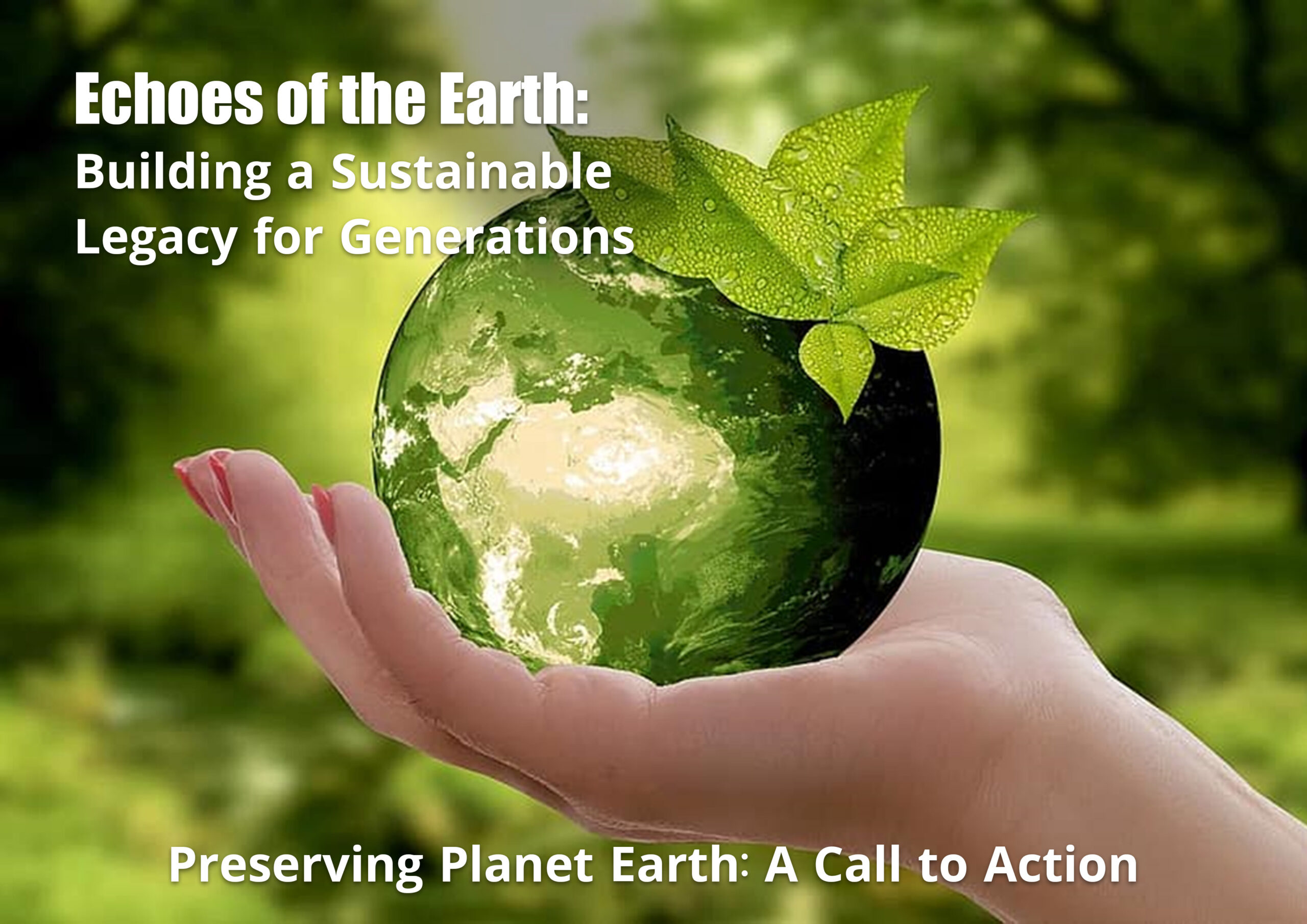
Echoes of the Earth: Building a Sustainable Legacy for Generations
By Lima Hazarika, PhD, Assistant Professor, Department of Zoology, School of Life Sciences, Assam Don Bosco University, Sonapur, India
Preserving planet Earth: A call to action
In the grand theatre of the cosmos, our humble planet Earth holds the center stage, adorned with awe-inspiring landscapes, teeming with life in every corner, and cradling the dreams of humanity in its embrace. The beauty of nature, from stunning landscapes to diverse ecosystems, gives us inspiration and comfort that cannot be replaced. However, as our human footprint expands, in the hustle and bustle of our daily lives, it becomes easy to forget the whispers of the Earth – the rustle of leaves in the wind, the gentle babble of a brook, the chirping of birds at dawn. These are echoes of the Earth that remind us of our interconnectedness with Nature and the responsibility we bear to protect and preserve it for future generations.
There is an increasing rise of environmental pressures and human-induced disruptions, in our rapidly evolving and technology-centric world, which is linked to challenges like climate change and habitat destruction, leading to an imbalance in Nature. Together, humans, plants, and animals constitute the biodiversity of our planet, weaving a rich tapestry of species that provide essential ecosystem services. In the face of escalating environmental challenges, maintaining biodiversity is key to ensuring a sustainable future for all species. The preservation of natural ecosystems, therefore, is not merely an environmental concern, but a fundamental requirement for our well-being. The future health of our planet and its inhabitants is inextricably linked to the health of our natural world, thus, underscoring the critical importance of nurturing and protecting the environment for a sustainable future.
Recent news reports vividly illustrate the pressing necessity of addressing environmental challenges as we strive to establish a sustainable legacy for future generations, exemplified by the alarming degradation of the Brahmaputra River in Northeast India owing to sewage pollution. Apart from the disturbance in the economy and livelihood of the people, pollutants from the sewage accumulate in aquatic fauna and flora, and over time cause ecological degradation of the aquatic environment. This aspect has been vividly highlighted by Deepa Padmanaban in her article on the deterioration of the Brahmaputra currently available on the website of the magazine Third Pole. In a comprehensive examination of environmental challenges, a recent scientific paper entitled ‘Rising Temperatures, Rising Risks: A Review of the Impact of Climate Change on Human Cardiac Health’ (published in the Journal of Environment Pollution and Human Health) has emphasized the repercussions of rising temperatures, changing weather patterns, and increased air pollution on human health and cardiovascular illnesses. In the quest for sustainable environmental solutions to such ecological challenges, researchers are increasingly exploring Nanotechnology – a frontier that merges principles from engineering and biology to pioneer innovative environmental technologies. This frontier allows for the design of novel materials and systems tailored to address air and water pollution. The immense potential of nanotechnology ranging from Nanomaterial-based Air Filters to Nano Biosensors for water quality monitoring, has been thoroughly discussed by Thakur and Kumar in their publication in the journal Science of The Total Environment in 2022. However, alongside its promises of nanotechnology, it prompts a crucial inquiry concerning safety, toxicity, and the enduring environmental consequences, necessitating meticulous risk assessment and regulatory vigilance. Thus, it is essential to consider the ethical and regulatory implications of nano-based pollution control strategies. Moreover, stakeholder engagement and public dialogue are crucial for ensuring transparent decision-making and responsible deployment of nano-enabled solutions.
Sustainability is not just a buzzword; it is a way of life – a commitment to living in harmony with the Earth and leaving behind a world that is vibrant, thriving, and full of promise for our future generation. It is about recognizing that our actions today have consequences that echo through time, shaping the world we will pass on to the next generation. At its core, sustainability is about balance – balancing the needs of people with the needs of the planet, balancing progress with preservation, and balancing short-term gains with long-term stewardship. It is a delicate work that requires cooperation, creativity, and collective action from individuals, communities, and governments alike.
Building a sustainable legacy for generations to come
It starts with a shift in mindset – a recognition that we are not separate from nature, but deeply interconnected with it. Whether we live in bustling cities or remote villages, we all rely on the Earth’s resources for our survival and well-being. By embracing a deeper connection to nature, we can begin to see ourselves as caretakers of the Earth, rather than mere consumers of its bounty. One of the fundamental pillars of sustainability is environmental conservation. From protecting forests and wetlands to preserving biodiversity and combating climate change, there are countless ways we can work together to safeguard the natural world. Planting trees, cleaning up litter, and supporting local conservation efforts are simple yet impactful actions that anyone can take to make a difference in the community. It is truly encouraging to learn about initiatives like One Community, dedicated to creating a sustainable world through innovative projects like eco-villages and hydro energy systems. By showcasing practical and appealing ways of living sustainably, they are building models inspiring a shift towards more eco-conscious lifestyles. Their focus on dome cluster designed houses using eco-friendly materials demonstrates a commitment to both aesthetics and sustainability, making it clear that beautiful living spaces can also be environmentally responsible. Moreover, their efforts in biodiversity conservation through botanical gardens and educational programs highlight the importance of holistic approaches to sustainability.
Sustainability is not just about protecting the environment; it is also about promoting social equity and economic prosperity. In many parts of the world, access to clean water, nutritious food, and basic healthcare is still a luxury rather than a right. By addressing social inequalities and empowering marginalized communities, we can create an equitable society where everyone has the opportunity to thrive. Furthermore, sustainable development means reimagining how we produce and consume goods and services. From renewable energy sources to eco-friendly products, there are innovative solutions available that can help us reduce our environmental footprint and build a more sustainable future. By supporting local businesses, buying organic produce, and opting for reusable alternatives, we can vote with our wallets for a more sustainable world. In the quest for environmental sustainability, innovation, and technology development are also vital contributors. Whether through green infrastructure, circular economy practices, smart farming methods, or sustainable transportation, the avenues for societal progress are limitless. It is imperative for governments, businesses professionals, and researchers to join forces, thereby pooling their expertise to unlock the potential of innovation and create solutions that propel us toward a more sustainable tomorrow.
Education also plays a crucial role in shaping attitudes and behaviours toward sustainability. By teaching children and adults alike about the importance of environmental stewardship, we can inspire future generations to become champions of change. Whether it is through school programs, community workshops, or online resources, there are countless opportunities to learn about sustainability and take action to make a difference.
In conclusion, building a sustainable legacy for generations to come is not just a lofty goal; it is a moral imperative that requires commitment, creativity, and collaboration from all of us. Whether we are planting trees in our backyard, advocating for environmental policies, or supporting sustainable businesses, each of us has a role to play in shaping the world we want to leave behind. Let us heed the echoes of the Earth and work together to create a future that is healthy, prosperous, and full of hope for generations to come.